
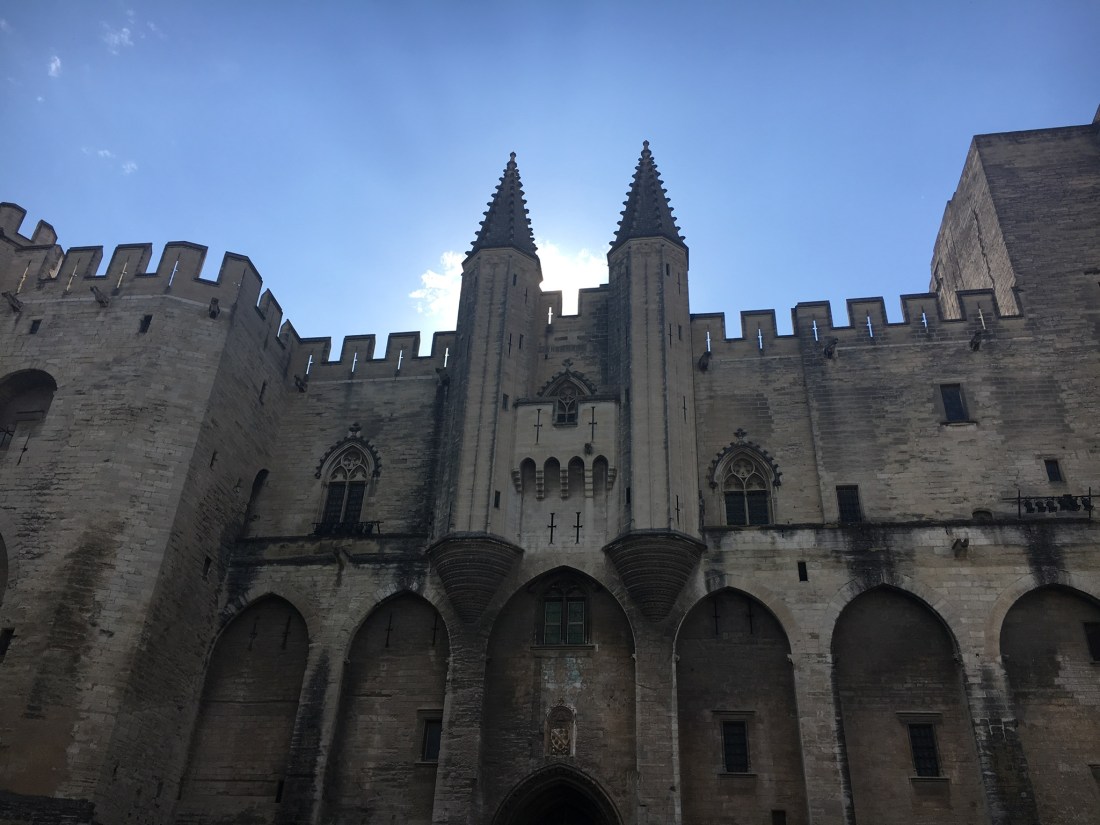
Long ago, conflicts were common between the secular rulers and papacy of Medieval Europe. In fact one dispute, that of King Philip the Fair of France and Pope Boniface VIII, became so bad during the early fourteenth century that Philip later pressured Boniface’s successor, Clement V, to settle permanently in Avignon in southeastern France. This period of “banishment” is commonly known as the Babylonian Captivity and lasted from 1309 to 1376, with seven popes in total ruling out of the new Papal Palace of Avignon.
However, something unexpected happened during this relocation to France. Now living in a lavish and ornately decorated palace, many of the popes soon said, “hey, we like nice things!” and proceeded to spend tons of church money frivolously on the many pleasures the 1300s had to offer (which in hindsight were not all that many). Not only did this period mark a transition in terms of where the church was located, but it also began a period of decline for church prestige. The seven popes at Avignon concentrated on the bureaucratic and financial matters of the papacy far more than spiritual objectives, creating an atmosphere of luxury and extravagance instead of the humble life the church had previously preached. Because the popes were far away from their roots in Rome, they seemed to feel more comfortable morphing the church into way more of a corporation than it had been in the past. These damages would later lead to the Great Schism and other church issues, but that’s another story.
The Papal Palace of Avignon still remains excellently preserved today, and has a superb guided audio tour. Walking at one’s own pace with a personal “histopad” (don’t ask me, I didn’t name them), one can scan “time portals” and see what each room of the palace looked like when the popes lived in the castle – an amazing experience if you happen to be as much of a history nerd as I am! Anyways, I’m sure we’re all busy running our church corporations, until next time – cheers!
 As you may already know, the American dollar and the EU Euro currency systems function very differently. During my travels, I have noticed the polarizing qualities of these differences among tourists, with one variation in particular causing much debate. Within this debate are two distinct groups of opposing viewpoints: those who like the €1 and €2 coins and those who prefer bills for such amounts. While I myself am in favor of the coins, I have seen many tourists (most of which are American) who have verbally proclaimed their hatred of using coins instead of low value bills such as the American dollar. Arguments can be made for both sides. Those who dislike the coins hold that coins can be easily lost, and complain that higher value coins add unnecessary weight to one’s pockets. However, the full-value Euro coins can be much more convenient than larger bills, especially the €2 coin, as one can simply pay with a single small coin rather than having to dig out two bills. There is no right answer to this issue, and I must say it is quite funny to see so many people bent out of shape over such a small difference. Surely the contrast in currency is relatively unimportant, and who knows, maybe it adds to the tourist experience! Until the next rather uninteresting debate – cheers!
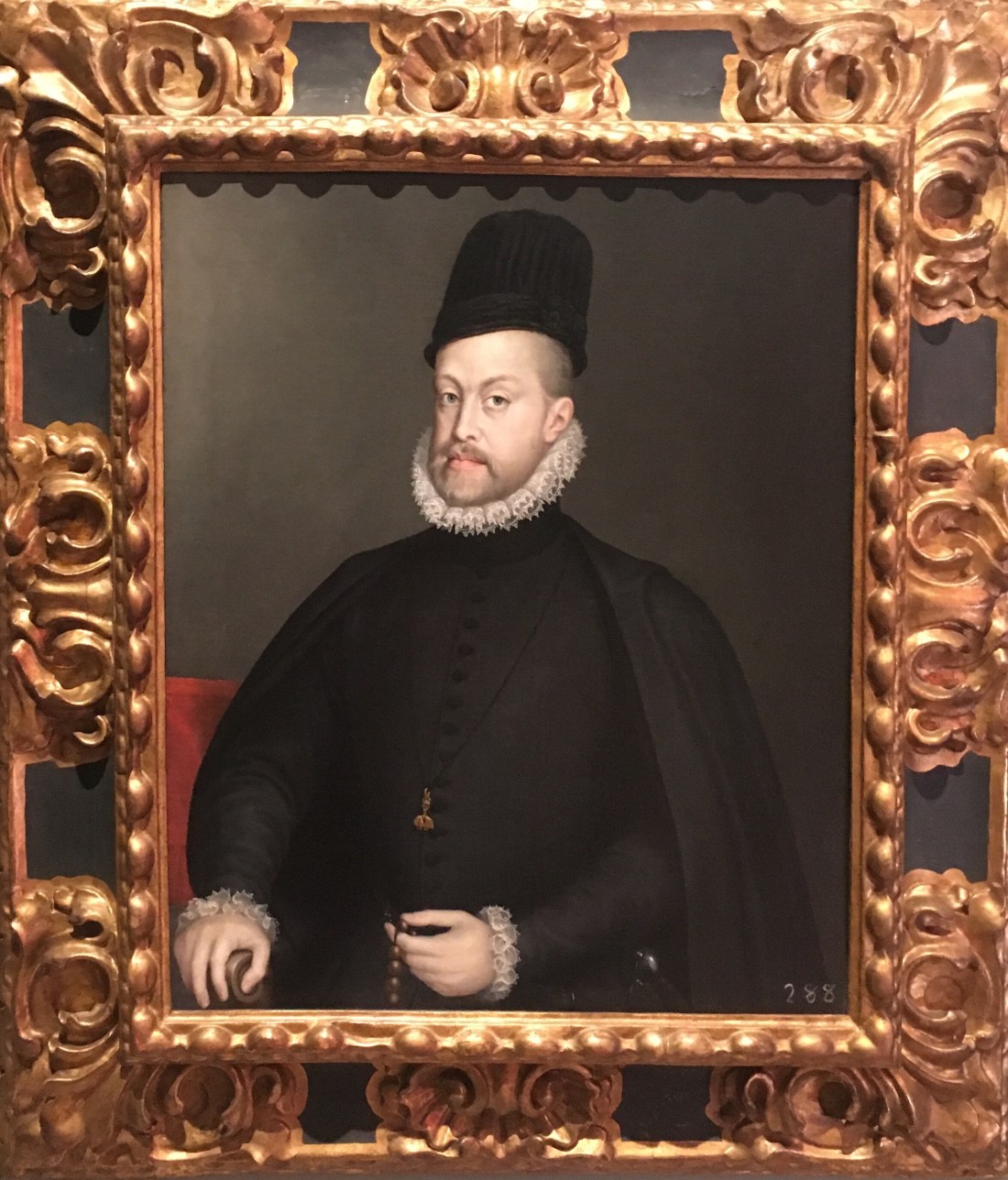
 Hola and welcome to part two of my quick look at Madrid, the capital city of España! Let’s jump right into it, shall we? First on the list is the beautiful Royal Palace of Madrid. Do you like huge empty rooms and kings with big noses? If so, then this is the place for you. Basically, the Bourbon dynasty came to Spain right before the French Revolution, and wanted to make sure the Spaniards knew that they meant business and were not to be messed with. So what did they do? Build a giant castle, obviously. With white marble everywhere and huge stone columns, the castle is a real stunner. Oh, and the face of Charles III, the first king to live in the palace, is everywhere. Like, everywhere. Overall, the opulent rococo style is amazing, and each room has something new to add. The armory is cool, too, but also a bit terrifying considering the amount of child armor suits on display. But if palaces aren’t your cup of tea, the museums of Madrid are quite nice as well. While I would love to share pictures of some of my favorite works, after getting yelled at by several employees I discovered that photos are prohibited in just about every museum or show in Madrid. I did manage to get one picture of an Anguissola portrait of Philip II while walking into the Prado Museum, but was overall quite disappointed that I was not allowed to take my own images of many famous works.
 Picasso’s Guernica and Goya’s The Third of May, 1808 are among many I would have liked to have captured, but as the saying goes, “memories capture what a photograph cannot.” Alright, well I think I’ll end it there for today, folks. Catch you next time – cheers!
 and BAM! Instant dramatic tone – no filters needed! Anyways, when I was standing awkwardly in front of some windows at the Madrid Palace, I caught myself using this technique once again…..
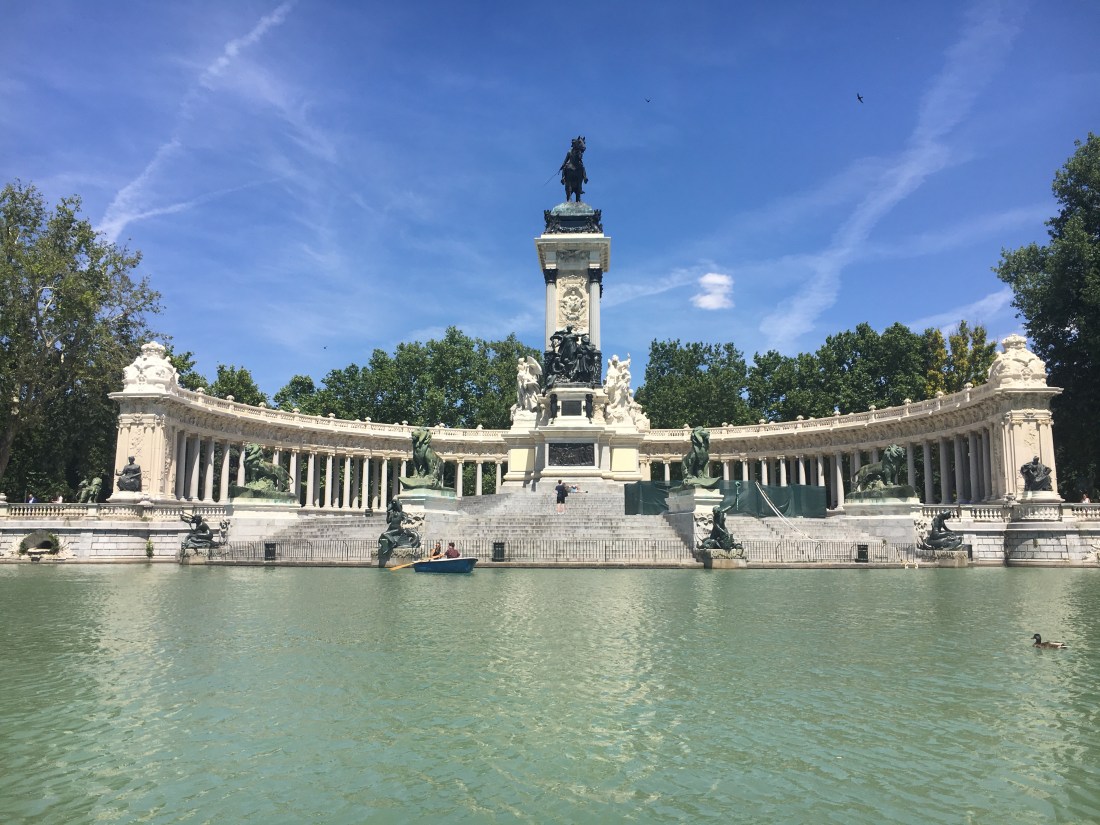
 Hola! I wish I could write the rest of this in Español, but alas my Latin education only goes as far in Spain as deciphering airport signs. Nonetheless, I was thoroughly impressed by the diverse range of sights and activities available in the city. Beautiful architecture and urban apartment buildings make up most of the city, but there are also huge parks and Botanical Gardens offering serene respite from the loud streets (and some pretty artsy photo opportunities). If you still want cool photos but in a more engaging environment, you and your friends can float, splash, and rock your way through the pond at the Royal Botanic Gardens in rented boats. The rowboats allow you to get up close and personal to the amazing marble, and, you know, let you impress some random Spaniards with your hopefully better-than-average rowing skills.

 globalformatt.com